
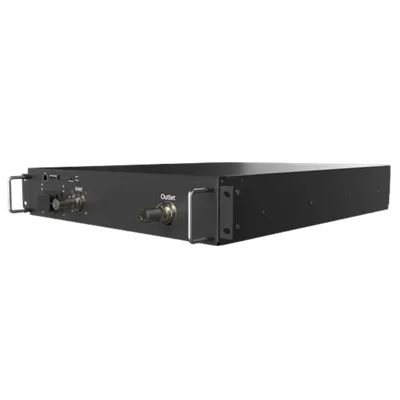
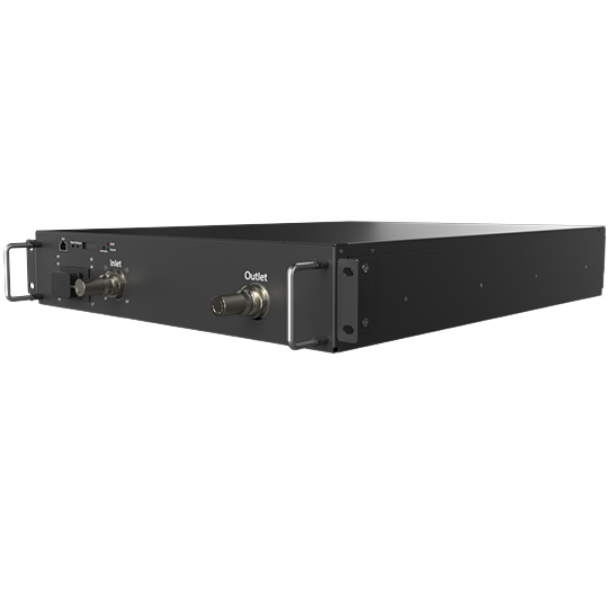
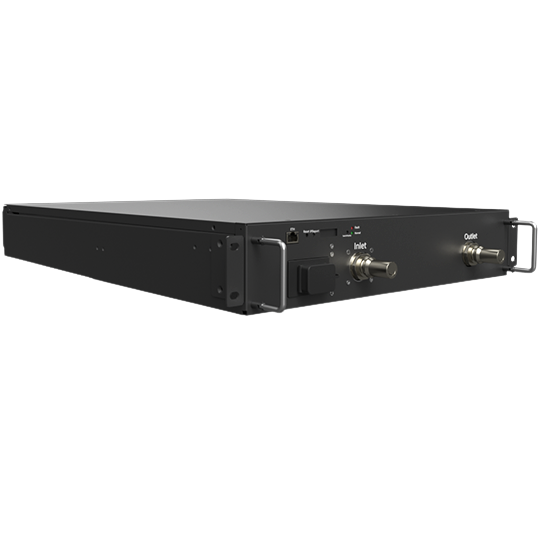

Antminer S23e U2 Hyd
865 TH/s at 10 J/TH in a sealed 2U chassis — Bitmain’s density play for operators who have already solved water.
8,650 W
10 J/TH
No onboard fans
~21 units per 42U rack
Overview
The S23e U2 Hyd — Bitmain’s model designation is S23e U2H — puts 865 TH/s of SHA-256 hashrate into a single 2U rack slot at a rated 8,650 W, or 10 J/TH on the wall. It is one of the most efficient machines Bitmain has shipped, and by a wide margin the most hashrate the company has packed into two rack units.
There are no fans in this chassis. Heat leaves through a sealed coolant loop via UQD08 quick-disconnects, which is what makes the density possible — and what makes this a machine for facilities, not garages. A 42U cabinet takes roughly 21 of these, which is around 18 PH/s and 180 kW behind a single rack door.
If you already run hydro, this is a straightforward density and efficiency upgrade. If you don’t, read the deployment requirements below carefully before you buy — and talk to us first, so we can confirm the machine fits your infrastructure.
At a Glance
Before You Buy: Deployment Requirements
This is industrial hardware. It will not run on a standard outlet and it cannot cool itself. You need all four of the following:
- Industrial three-phase power. 380–480V AC, 47–63 Hz, up to 20 A. No 120V or single-phase 240V operation.
- A coolant loop. 16–20 L/min flow per unit at 3.5 bar or less, with inlet coolant held between 20–50°C. UQD08 quick-disconnect fittings.
- Heat rejection. Dry coolers, a cooling tower, or heat reuse — roughly 8.65 kW of thermal load per unit has to go somewhere.
- Rack space and network. 2U per unit in a 19″ cabinet, plus RJ45 Ethernet.
Not sure whether your setup qualifies? Call us before ordering and we’ll go through your power and cooling with you.
Full Specifications
Where It Sits in the S23 Hydro Family
The S23e U2 Hyd is the density-optimized middle tier: roughly 49% more hashrate per chassis than the base S23 Hyd, in a chassis one rack unit smaller than the 3U flagship.
Why Hydro
Around 21 units in a 42U cabinet. Hitting the same hashrate with air-cooled hardware takes substantially more floor space and air handling.
With no fans swinging against ambient temperature, wall draw tracks the nameplate far more closely than on an air-cooled unit.
An air-cooled fleet scatters its heat into a room. A hydro loop hands it to you in a pipe at a usable temperature — which opens up heat-reuse options.
No onboard fans means the chassis itself is near-silent. Facility noise comes from pumps and dry coolers, which are far easier to site and isolate.
Buying From BlueForge
- Hydro experience. We’ve specified, deployed, and serviced liquid-cooled fleets. You get straight answers on loop design and heat rejection, not a spec sheet read back to you.
- Manufacturer warranty. Covered under Bitmain’s factory warranty — exact terms confirmed on your order.
- Deployment guidance. We’ll review your electrical capacity, loop design, and rack layout before you commit, not after the pallet lands.
- Volume pricing. Rack-scale and multi-rack quantities priced individually. Tell us the target and we’ll put a number against it.
- In-house repair. Hash board and control board diagnostics handled directly by our team.
Let’s size it properly.
Volume pricing, lead times, or a straight conversation about whether your current infrastructure can take these — we’ll give you a real answer.
Email Us
BlueForge Advisors LLC ·
Specifications per Bitmain’s S23e U2H product manual. Hashrate and power figures are manufacturer-rated and vary with inlet coolant temperature, flow rate, firmware, voltage, and pool conditions. Hydro hardware requires a correctly specified coolant loop; operating outside Bitmain’s stated coolant parameters may void warranty coverage.
Valoraciones
No hay valoraciones aún.